The Table You Actually Want
· 1 min read
Table height, seat depth and what is behind your screen decide whether four hours is comfortable, and none of them appear in any listing.
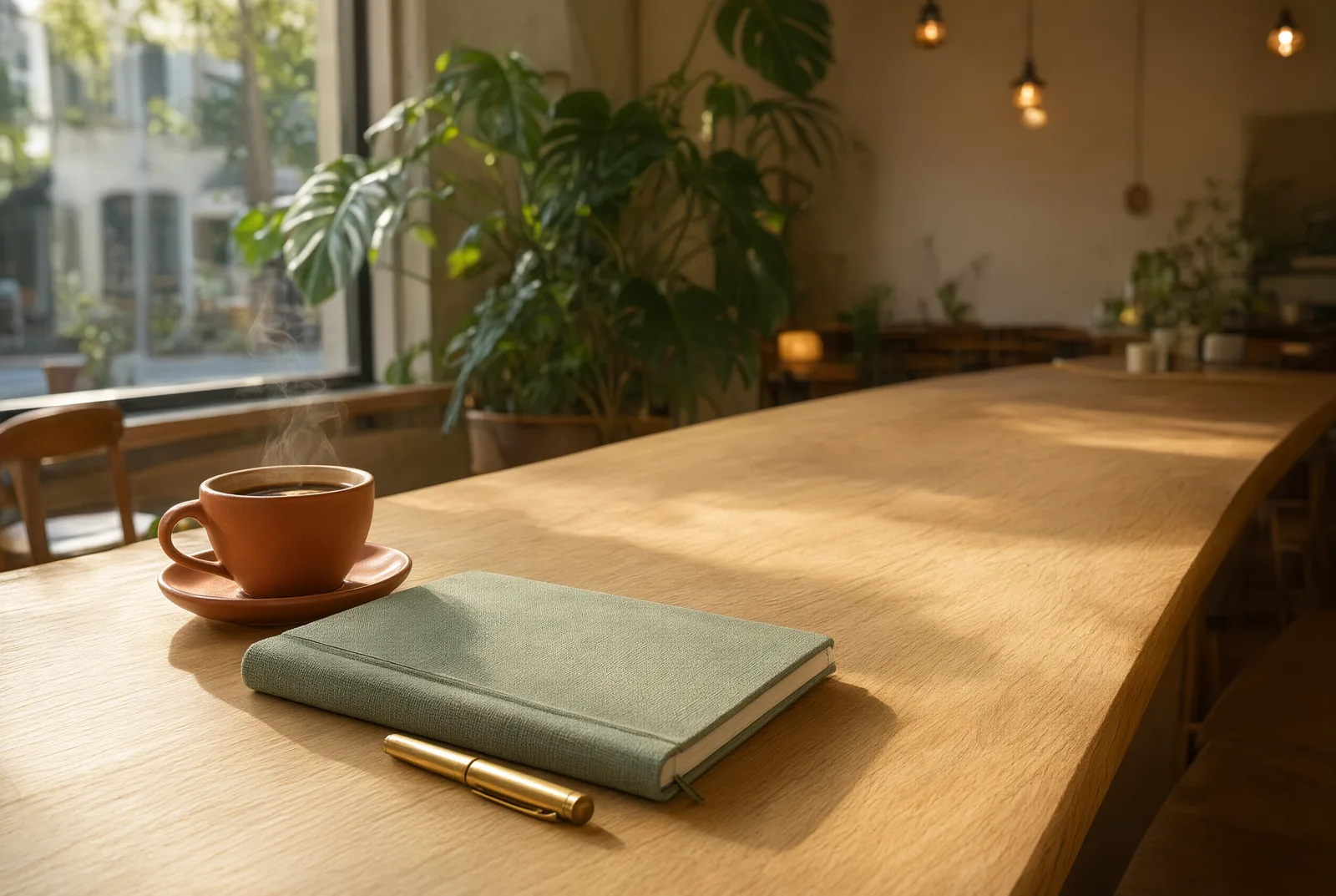
Cafe tables are usually dining height with dining chairs, which is roughly right for a laptop for an hour and wrong for four. The common failure is a low armchair against a low table: comfortable for ten minutes, wrist pain by the second hour. If you have a choice, take the upright chair and the higher table every time.
The second variable is what is behind you. A screen facing the room is a screen everyone reads over your shoulder, which matters if you are working on anything at all sensitive and matters psychologically even when you are not. A wall or a window behind you removes the low-grade awareness of being watched.
Light and where to sit
Direct sun on a screen is unusable and moves through the day, so a table that is perfect at ten can be impossible at two. North-facing windows are stable; anything else is a moving target. In the evening the reverse problem appears — a dim room with a bright screen is the setup that produces headaches.
None of this is in any directory, including this one. What a listing can tell you is whether the room has Wi-Fi, sockets and hours long enough to be worth the trip. Whether it has a table you can work at for four hours is something you find out by sitting at it, which is why the shortlist matters more than the search.