What a Short Breakfast Menu Tells You
· 1 min read
Six items handwritten on a board is not a smaller version of a laminated menu with forty. It is a different kind of promise, and usually a better one.
A long breakfast menu is a logistics document. Forty items means forty ingredients held in stock, which means most of them are held longer than they should be, which means a freezer. It is not that a long menu is dishonest — it is that it can only be delivered one way, and that way involves a lot of things arriving already cooked.
Six items on a board means somebody decided what the kitchen does well and stopped there. It also means the board changes, which is the part worth watching: a place that rewrites its menu weekly is buying what is good that week. Ask what changed recently. If the answer is nothing, the short menu is just a small laminated menu written in chalk.
The tells that survive translation
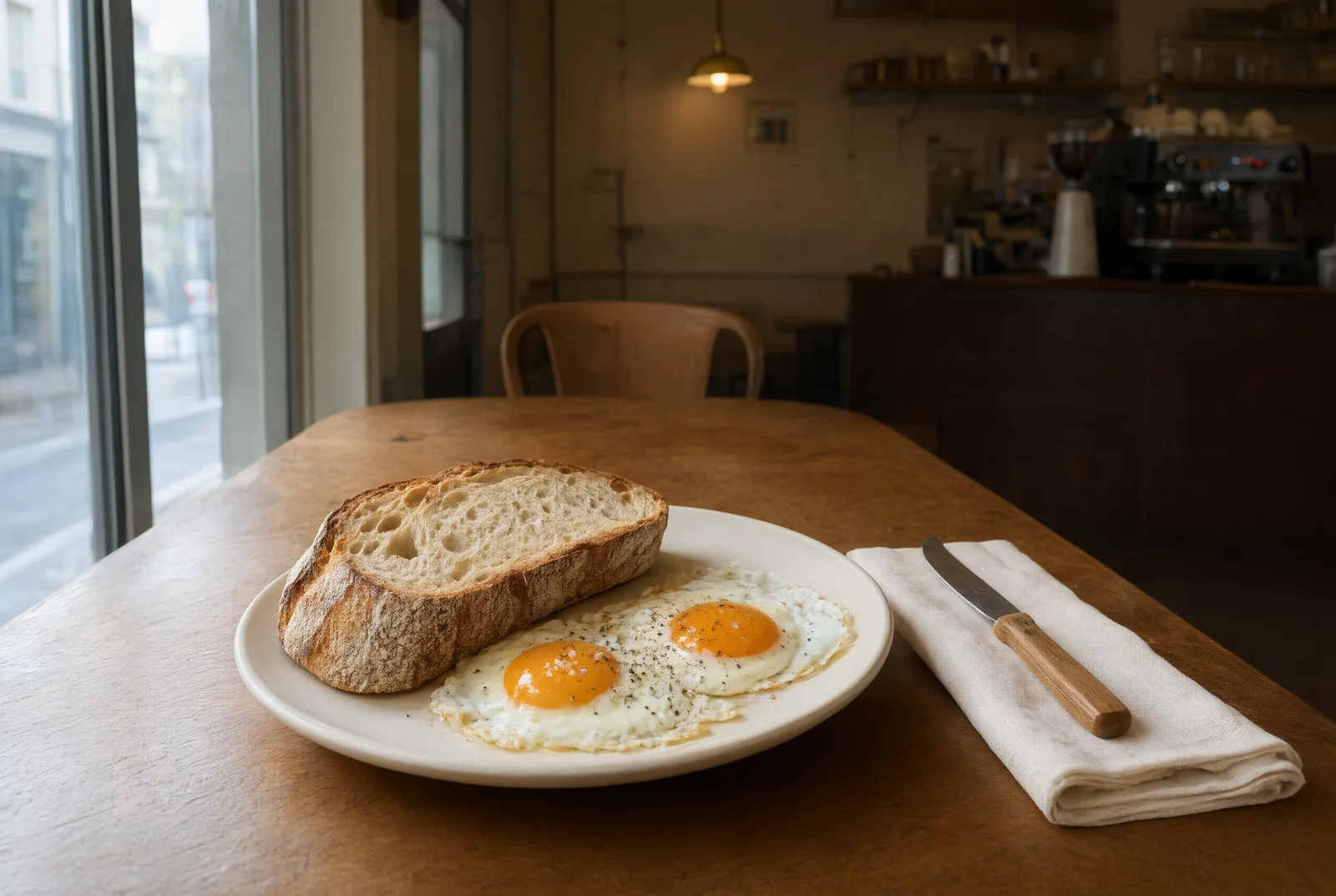
You do not need the language to read a menu. Count the items. Look at whether prices are rounded to the nearest note, which usually means they were set once and never revisited. See whether the eggs have a paragraph or a word — a kitchen that cares about eggs will tell you how they are cooked, because that is the only variable it controls.
None of this makes a short menu automatically good. A tiny menu executed badly is worse than a long one executed competently, and the only way to find out is to eat there. But when you are standing outside two doors with fifteen minutes to spare, the shape of the menu is the cheapest information available, and it is usually right.