Breakfast With a Laptop: What Is Fair
· 1 min read
Eating and working at the same table is fine in some rooms and rude in others, and the difference is almost always about how many tables there are.

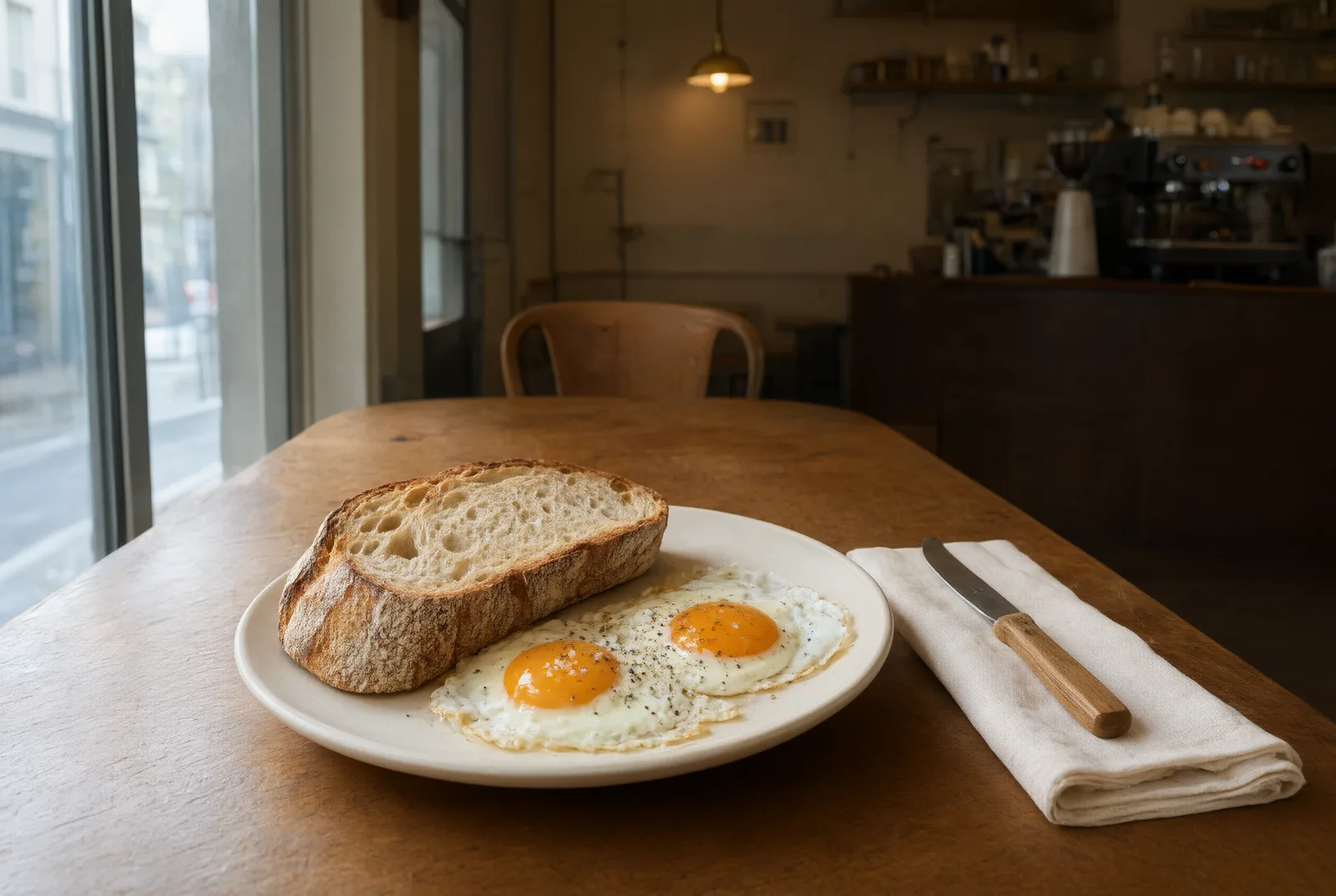
A cafe with thirty seats at eight in the morning has capacity. A cafe with nine seats at nine on a Saturday does not. The same behaviour — one plate, one coffee, a laptop, ninety minutes — is unremarkable in the first and genuinely costly in the second, because it takes a table out of a room that turns over three times an hour.
The useful rule is to look at the queue rather than the sign. If people are standing, the table is not yours to hold. If the room is half empty and the staff are restocking, nobody minds. Most places that dislike laptops during service will say so, and the ones that say nothing are usually watching the door rather than the screens.
Buying your seat honestly
If you plan to stay, order like someone who is staying: something to eat, not just an espresso, and another drink when the first is gone. That is not a moral position, it is arithmetic — the room has to cover rent from the seats it has. An hour and a half for the price of a single filter coffee is a subsidy, and in a nine-seat room it is a large one.
If you want to work through a morning without any of this calculation, the site has a separate list for it: cafes filed as study or workspace, or listing both Wi-Fi and power outlets, which are the rooms built for exactly that. Breakfast rooms and work rooms overlap, but they are not the same thing, and the difference is usually the number of chairs.