What a Roast Date on the Bag Is Actually Worth
· 1 min read
A printed date is the single most useful piece of information on a bag of coffee, and it is useful in a narrower way than most people assume.
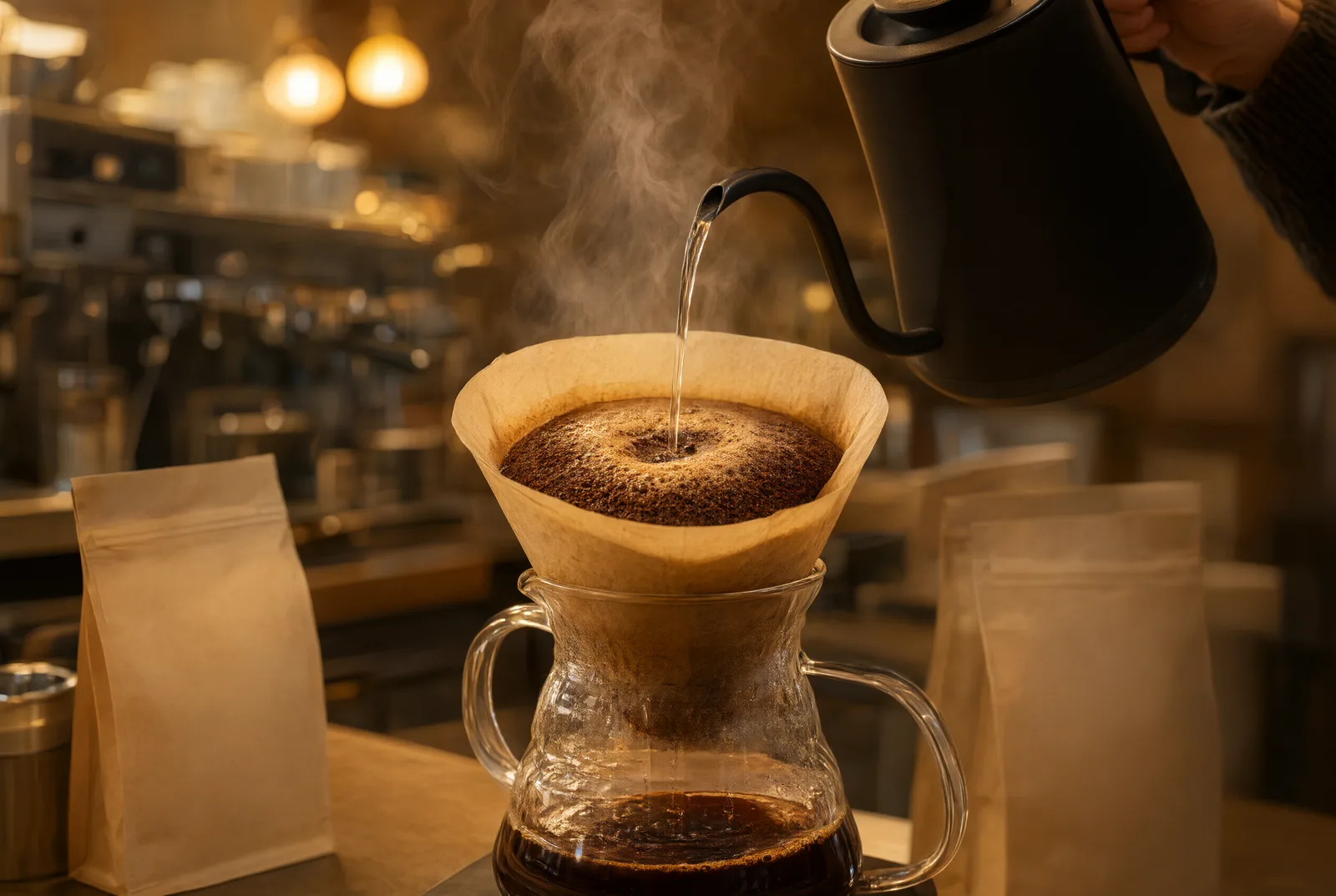
Coffee does not spoil, it fades. Roasted beans release carbon dioxide for days after roasting and lose aromatics for months afterwards, so there is a window — roughly one to four weeks for espresso, a few days earlier for filter — where a coffee tastes the way the roaster intended. Outside it the coffee is not dangerous, it is just quieter.
A roast date lets you place a bag in that window. A best-before date does not: it is a date somebody added twelve months to. When a shelf shows only best-before dates you are looking at coffee whose roaster did not expect you to care, which is itself information.
What the date does not tell you
It says nothing about quality. A bag roasted on Tuesday can be a poor coffee roasted badly, and a three-month-old bag of something exceptional will still be more interesting than a fresh commodity blend. Freshness is a floor, not a ceiling.
It also does not transfer to the cup you are drinking in a cafe, where the relevant question is how long the beans have been open and how busy the bar is. A quiet bar grinding through half a kilo a day is serving fresher coffee than a busy one with a bad rotation, and neither will tell you. The proxy is the queue: coffee moves where people are.